How to Get More Leads and Stay Booked
If you're a local business owner, you've probably heard that Google Ads can generate leads quickly. You've also probably heard stories about businesses spending thousands of dollars on PPC and getting little to show for it.
The truth lies somewhere in the middle.
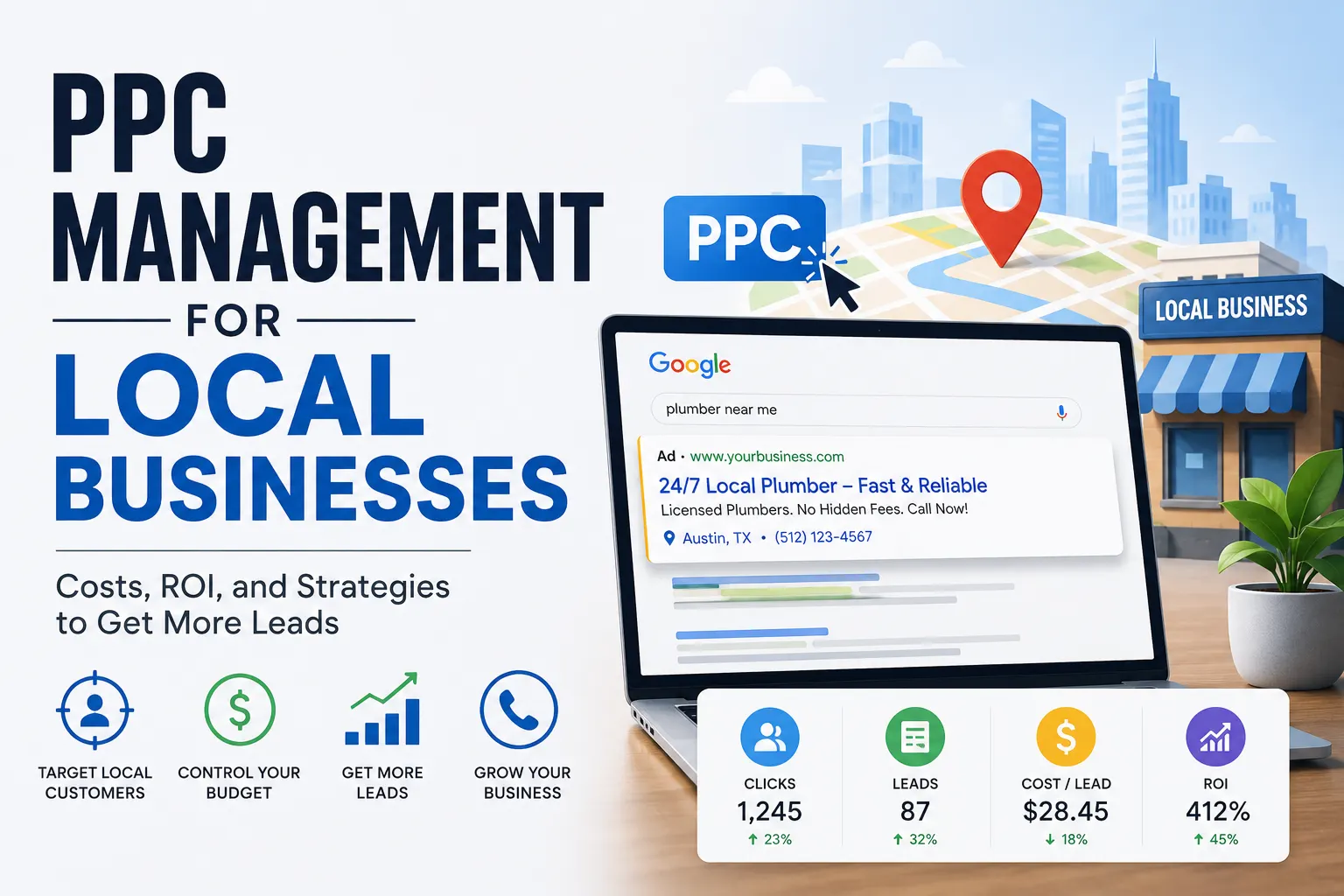
PPC management for local businesses can be one of the fastest ways to generate qualified leads, phone calls, and booked appointments. But success doesn't come from simply launching ads and hoping for the best. It comes from having the right strategy, targeting the right audience, and continuously optimizing campaigns based on real data.
Whether you're a plumber, HVAC contractor, roofer, electrician, landscaper, lawyer, or any other local service provider, understanding how PPC management works can help you make smarter decisions and get more value from every advertising dollar.
Let's break it down.
What Is PPC Management?
PPC stands for Pay-Per-Click advertising. It's a form of online advertising where you only pay when someone clicks on your ad.
The most common PPC platform for local businesses is Google Ads.
When someone searches for a service such as:
- Emergency plumber near me
- HVAC repair in Dallas
- Roofing company in Phoenix
- Electrician open now
Google displays paid ads at the top of the search results.
PPC management is the process of creating, monitoring, and optimizing those campaigns to generate leads at the lowest possible cost.
A successful PPC campaign involves much more than choosing a few keywords and setting a budget. It includes:
- Keyword research
- Ad creation
- Landing page optimization
- Bid management
- Conversion tracking
- Negative keyword management
- Performance reporting
- Ongoing optimization
Without proper management, it's easy to waste money on irrelevant clicks and unqualified traffic.
Why PPC Works So Well for Local Businesses
One of the biggest advantages of PPC is speed.
Unlike SEO, which can take months to generate meaningful traffic, PPC allows your business to appear in front of potential customers immediately.
Think about how people search today.
When someone's air conditioner breaks in the middle of summer, they're not researching solutions for weeks. They're searching for "AC repair near me" and calling one of the first businesses they find.
PPC puts your business in front of these high-intent customers at exactly the moment they need your services.
Some of the biggest benefits include:
Immediate Visibility
Your ads can appear at the top of Google within hours of launching a campaign.
Highly Targeted Traffic
You can target specific:
- Cities
- ZIP codes
- Service areas
- Times of day
- Devices
This ensures your budget is focused on people who can actually become customers.
Measurable Results
Every click, call, form submission, and lead can be tracked.
Instead of guessing whether your marketing is working, you'll know exactly how many leads and customers your campaigns generate.
How PPC Management Works
Many business owners think PPC is simply about buying clicks.
In reality, effective PPC management involves several moving parts working together.
Step 1: Keyword Research
Everything starts with keywords.
The goal is to identify search terms that potential customers use when they're ready to hire someone.
For example, a roofing company may target:
- Roof repair near me
- Emergency roof repair
- Roofing contractor in [city]
- Roof replacement estimate
These keywords signal strong buying intent.
Step 2: Creating Relevant Ads
Once keywords are selected, ads are written to match the user's search.
A strong PPC ad should:
- Address the searcher's problem
- Highlight key benefits
- Include a clear call to action
- Build trust quickly
For example:
"Need Emergency Roof Repair? Licensed Local Roofers. Free Inspection. Call Today."
Simple. Direct. Relevant.
Step 3: Landing Page Optimization
One of the biggest PPC mistakes is sending traffic to a homepage.
A dedicated landing page typically converts much better because it focuses on a single service and action.
An effective landing page includes:
- Clear headline
- Service benefits
- Customer reviews
- Contact form
- Click-to-call phone number
- Trust signals and certifications
Step 4: Conversion Tracking
If you're not tracking conversions, you're flying blind.
PPC management should track:
- Phone calls
- Form submissions
- Appointment requests
- Online bookings
This data helps determine which keywords and ads are generating actual leads.
Step 5: Ongoing Optimization
PPC isn't a set-it-and-forget-it strategy.
Campaigns should be reviewed regularly to:
- Pause underperforming keywords
- Adjust bids
- Improve ad copy
- Add negative keywords
- Increase conversion rates
The businesses that consistently optimize usually achieve the best results.
How Much Does PPC Management Cost?
This is one of the most common questions local business owners ask.
The answer depends on your industry, market competition, and advertising goals.
Generally, there are two costs involved:
Ad Spend
This is the amount paid directly to Google.
Many local businesses start with:
- $500 to $2,000 per month for smaller markets
- $2,000 to $5,000 per month for competitive industries
- $5,000+ per month in larger metro areas
Management Fees
If you hire a PPC agency or freelancer, you'll also pay a management fee.
Common pricing models include:
Flat Monthly Fee
A fixed monthly cost regardless of ad spend.
Percentage of Ad Spend
Typically between 10% and 20% of monthly advertising spend.
Performance-Based Pricing
Some agencies charge based on lead volume or performance metrics.
While it may be tempting to choose the cheapest option, poor PPC management often costs far more through wasted ad spend.
Is $20 Per Day Enough for Google Ads?
Many small business owners ask whether a $20 daily budget is enough.
The honest answer is: it depends.
In some industries, $20 per day can generate meaningful results.
In others, a single click may cost $20 or more.
Several factors influence your budget requirements:
- Industry competition
- Geographic location
- Keyword costs
- Service demand
- Conversion rates
A local plumber in a smaller town may generate leads with a modest budget.
A personal injury lawyer in a major city may need a significantly larger investment to compete effectively.
Rather than focusing solely on budget, focus on profitability.
A campaign that generates $10,000 in revenue from a $2,000 investment is far more important than having the lowest advertising costs.
How to Measure PPC Success
Many businesses focus on the wrong metrics.
Clicks and impressions may look impressive, but they don't pay the bills.
The metrics that matter most include:
Cost Per Lead (CPL)
How much you're paying to generate a lead.
Conversion Rate
The percentage of visitors who take action.
Cost Per Customer
How much it costs to acquire a paying customer.
Return on Investment (ROI)
The revenue generated compared to advertising costs.
For example:
Monthly Ad Spend: $2,000
Management Fee: $500
Total Investment: $2,500
Leads Generated: 50
Customers Closed: 10
Average Job Value: $1,500
Revenue Generated: $15,000
In this scenario, the campaign produces a strong return despite the initial advertising investment.
Common PPC Mistakes Local Businesses Make
Even good businesses can struggle with PPC when campaigns aren't managed properly.
Here are some of the most common mistakes.
Targeting Broad Keywords
Broad keywords often attract irrelevant traffic.
Specific, local-focused keywords usually generate higher-quality leads.
Ignoring Negative Keywords
Negative keywords prevent your ads from appearing for irrelevant searches.
Without them, budgets can disappear quickly.
Sending Traffic to the Homepage
Generic homepages rarely convert as well as dedicated landing pages.
Failing to Track Leads
If you can't identify where leads are coming from, optimization becomes nearly impossible.
Making Changes Too Quickly
PPC requires data.
Making major adjustments before collecting enough information can hurt performance.
How Long Does PPC Take to Produce Results?
One of the biggest advantages of PPC is speed.
However, optimization still takes time.
Here's a realistic timeline:
First Week
Campaign launches and begins collecting data.
First Month
Initial leads and conversion trends emerge.
Months Two to Three
Keyword optimization improves efficiency and lead quality.
Months Three to Six
Campaigns typically become more predictable and profitable.
Businesses that commit to ongoing optimization usually see stronger long-term results than those expecting instant perfection.
Choosing the Right PPC Management Company
Not all PPC providers are created equal.
Before hiring an agency, ask questions such as:
- How do you track leads?
- Do you provide monthly reporting?
- How often do you optimize campaigns?
- Do you manage landing pages?
- What industries do you specialize in?
- How do you measure success?
A quality PPC partner should focus on generating revenue, not just increasing clicks.
They should also be transparent about performance, strategy, and costs.
Final Thoughts
PPC management for local businesses isn't about buying traffic. It's about generating qualified leads that turn into paying customers.
When done correctly, PPC can provide predictable lead generation, measurable ROI, and a steady flow of new business opportunities.
The key is having a strategy built around data, optimization, and continuous improvement.
Whether you manage campaigns yourself or hire a PPC management company, understanding how PPC works will help you make better decisions and avoid costly mistakes.
The businesses that win with PPC aren't necessarily the ones with the biggest budgets. They're the ones that consistently optimize, track results, and focus on what matters most—turning clicks into customers.