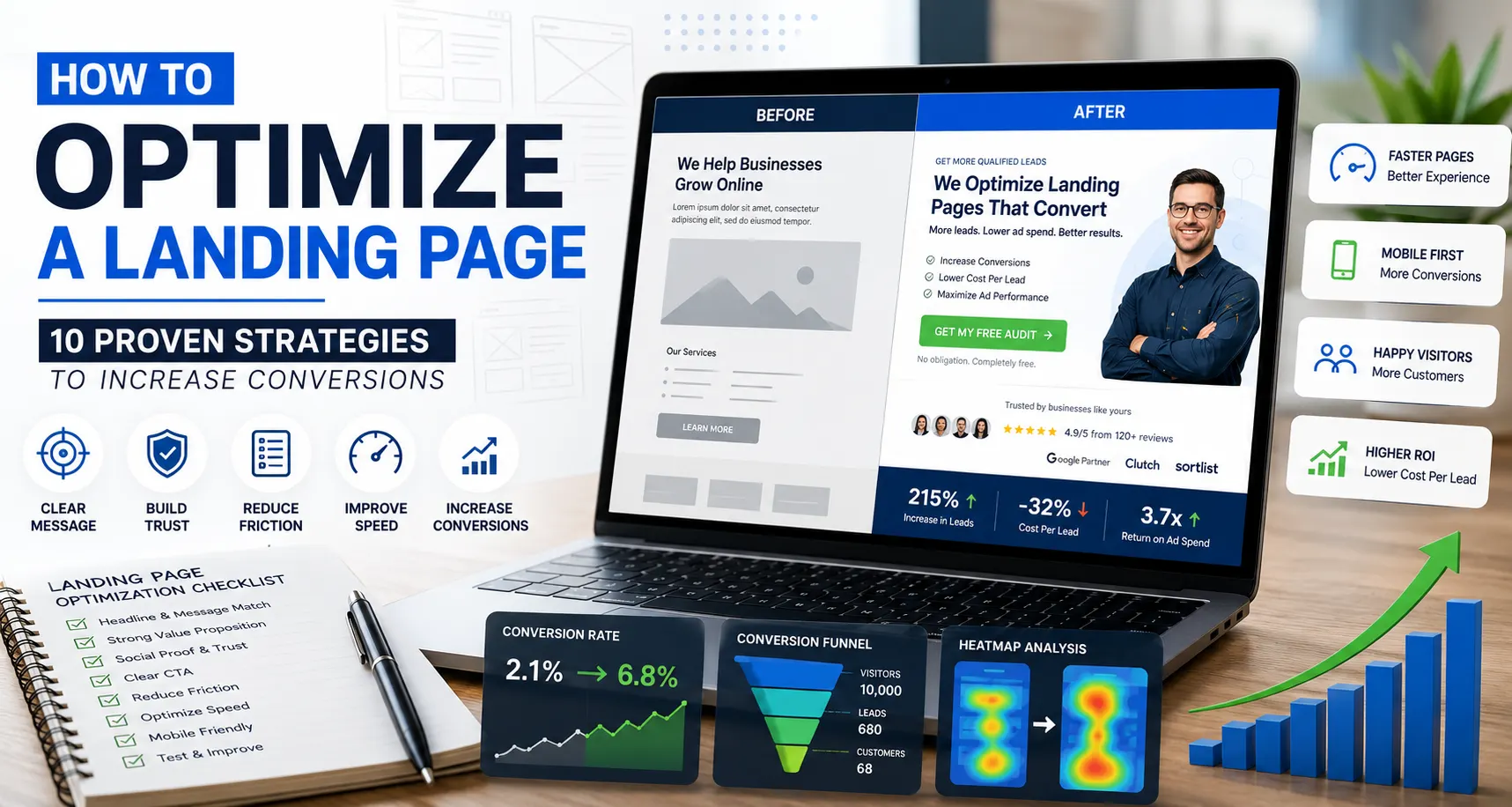
10 Proven Strategies to Increase Conversions
Getting people to visit your website has never been more expensive. Whether you're investing in Google Ads, Meta Ads, SEO, or email marketing, every click comes at a cost. That's why focusing solely on increasing traffic is rarely the smartest growth strategy. If your landing page isn't converting visitors into leads, more traffic simply means more missed opportunities.
The businesses that consistently generate more enquiries aren't always the ones with the biggest marketing budgets. They're the ones that make better use of the traffic they already have. A well-optimized landing page can improve conversion rates, reduce your cost per lead, and increase the return on every marketing campaign without spending an extra dollar on advertising.
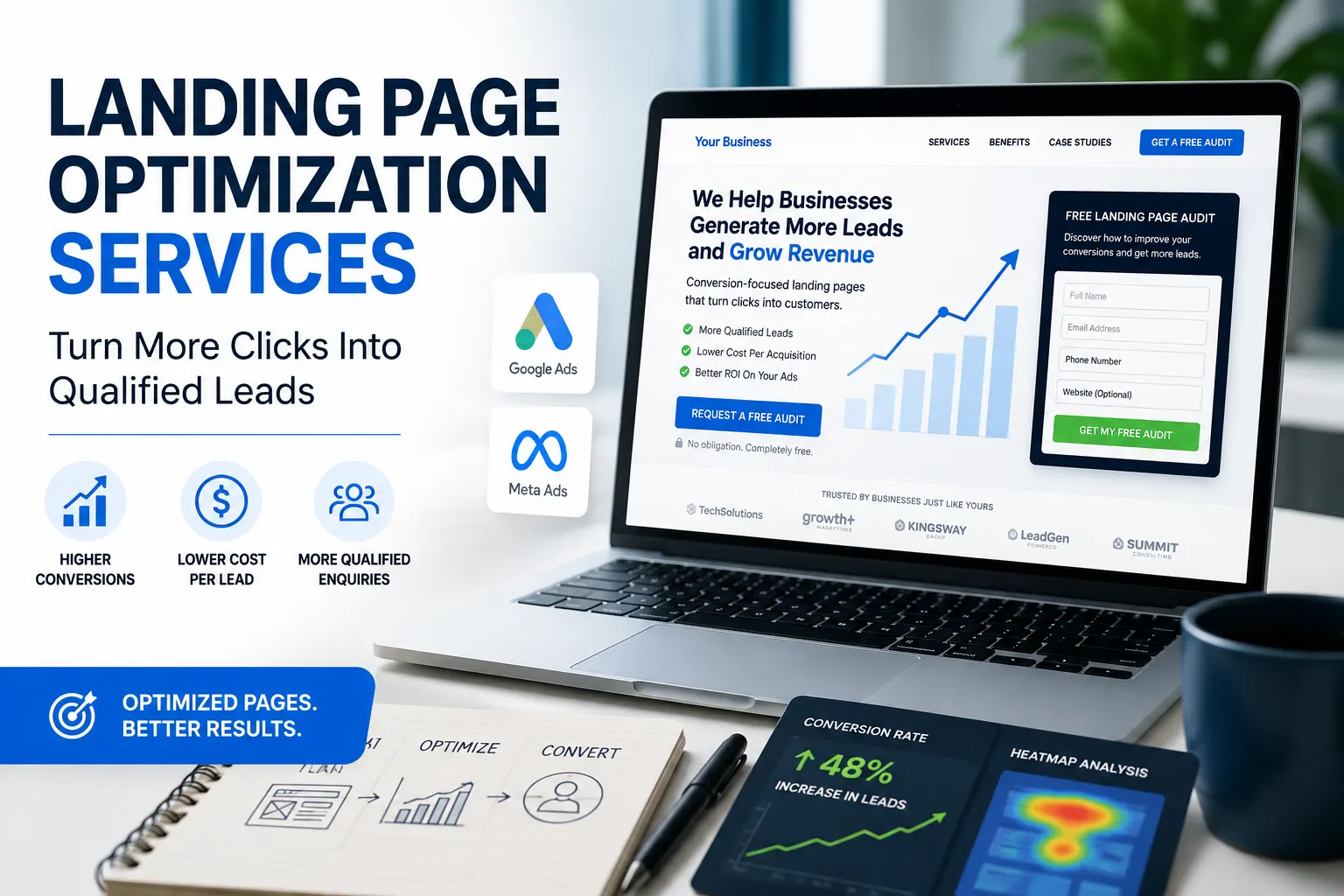
If you're looking for professional support, our guide to Landing Page Optimization Services explains how Clievox helps businesses build high-converting landing pages. In this article, we'll focus on practical strategies you can use to improve your existing landing pages and generate more qualified leads.
Before You Optimize Anything, Understand Why People Buy
Many businesses think landing page optimization is about choosing the right button colour or making a website look more modern. While design certainly matters, visitors don't convert because a page looks attractive. They convert because they believe taking the next step will help them achieve the result they're looking for.
This is where Alex Hormozi's Value Equation provides a useful framework for understanding why some landing pages outperform others.
According to Hormozi, people perceive value based on four factors:
- The result they want to achieve.
- How confident they are they'll achieve it.
- How quickly they'll get that result.
- How much effort, risk, or sacrifice is required.
Every high-converting landing page improves one or more of these factors.
For example, if your landing page promises to generate more qualified leads, you're increasing the visitor's perceived outcome. When you support that promise with customer testimonials, case studies, and measurable results, you increase their confidence that your business can actually deliver. If you offer a free consultation within 24 hours, you reduce the perceived time required to see progress. Finally, if your enquiry form only asks for a few essential details, you reduce the effort required to take action.
Viewed through this lens, landing page optimization becomes much more than a collection of design tweaks. Every improvement should either increase perceived value or reduce friction. Once you understand this principle, it becomes much easier to identify why visitors are leaving and what changes are likely to improve conversions.
1. Match Your Landing Page to Visitor Intent
The first question every visitor asks is simple: "Am I in the right place?"
If someone clicks an advertisement promoting a free landing page audit, they expect to arrive on a page dedicated to that offer. Sending them to a homepage that lists every service you provide forces them to search for the information they were promised, creating unnecessary friction from the very beginning.
Your headline should reinforce the message that encouraged the click. Supporting copy should expand on that promise rather than introducing unrelated services or company information. When visitors immediately recognise that your page aligns with their expectations, they're far more likely to continue reading.
Message match doesn't just improve user experience—it also increases perceived likelihood because visitors feel they've found the solution they were actively searching for.
2. Strengthen Your Offer
Many landing pages ask visitors to contact the business without giving them a compelling reason to do so. Buttons labelled Contact Us or Submit don't communicate value because they focus on the action rather than the outcome.
Instead, create an offer that reduces hesitation.
This could include:
- A free landing page audit
- A no-obligation consultation
- A personalised growth plan
- A custom proposal
- A free website performance review
The offer should answer one important question: "What do I gain by taking the next step?"
The easier that answer is to understand, the easier it becomes for visitors to justify completing your form.
3. Focus on Outcomes, Not Services
One of the biggest mistakes businesses make is describing what they do instead of explaining what customers achieve.
Visitors don't wake up wanting landing page optimization. They want more enquiries, lower advertising costs, better conversion rates, and increased revenue. Your messaging should reflect those goals rather than simply listing the services you provide.
Compare these two statements:
"We build conversion-focused landing pages."
"We help businesses generate more qualified leads without increasing their advertising budget."
Both describe the same service, but the second focuses on the outcome the customer actually cares about.
When you consistently frame your messaging around transformation rather than features, your landing page becomes significantly more persuasive because it speaks directly to the visitor's objectives.
4. Build Trust Before Asking for Commitment
Visitors rarely convert the moment they arrive on a page. Before sharing their contact details, they want reassurance that your business is capable of delivering on its promises.
Reviews, testimonials, case studies, guarantees, certifications, awards, and client logos all help increase perceived likelihood by showing that others have already trusted your business and achieved positive results.
Rather than filling your page with generic five-star reviews, focus on evidence that demonstrates measurable outcomes. A testimonial explaining how a client doubled their lead generation after optimizing their landing page is far more persuasive than a simple statement saying, "Great service."
Trust isn't built through bold claims. It's built through proof.
5. Make Your Call-to-Action Impossible to Ignore
By the time visitors reach your call-to-action, they should already understand the value of your offer and feel confident in your business. Your CTA simply guides them towards the next logical step.
Use action-oriented language that reinforces the benefit they'll receive, such as Request My Free Audit, Book My Consultation, or Get My Custom Quote.
Your call-to-action should also appear naturally throughout the page instead of only at the bottom. Some visitors are ready to convert after reading your headline, while others need more reassurance before making a decision. Providing multiple opportunities to take action ensures you're not forcing interested prospects to search for the next step.
6. Remove Friction From Every Step
Alex Hormozi often talks about reducing the effort required for customers to achieve their desired outcome. The same principle applies to landing pages. Even if visitors believe your offer is valuable, they'll hesitate if taking the next step feels complicated.
Start by reviewing your landing page from a visitor's perspective. Are they forced to navigate through multiple sections before finding your contact form? Does the form ask for information that isn't necessary? Is it clear what happens after they submit their details?
Every additional field, unnecessary click, or confusing instruction adds friction to the conversion process. While some businesses assume longer forms help qualify leads, they often have the opposite effect by discouraging potential customers from enquiring in the first place.
A good landing page makes taking action feel effortless. Ask only for the information you need to start the conversation, explain what visitors can expect after submitting the form, and remove anything that distracts them from your primary goal.
The easier it is to become a lead, the more qualified enquiries you're likely to receive.
7. Optimize for Speed and Mobile Users
A slow landing page can undermine even the best offer. Modern consumers expect websites to load almost instantly, especially when they're browsing on mobile devices. If your page takes too long to appear, many visitors won't wait—they'll simply return to the search results and choose another business.
Speed isn't just a technical issue; it's part of the overall user experience. Faster pages reduce frustration, improve engagement, and create a smoother journey from the first click to the final call-to-action.
Mobile optimization is equally important. For many businesses, more than half of website traffic now comes from smartphones, yet it's still common to see landing pages designed primarily for desktop users.
A mobile-friendly landing page should feature:
- Clear, readable text without excessive scrolling.
- Buttons that are easy to tap.
- Fast-loading images.
- Short forms that are easy to complete on smaller screens.
- A layout that keeps the most important information visible.
Remember, visitors don't compare your landing page with your previous version. They compare it with every other fast, intuitive website they use every day.
8. Reduce Perceived Risk
People naturally hesitate when making purchasing decisions because they don't want to make the wrong choice. That's why one of the fastest ways to improve conversions is by reducing the perceived risk of contacting your business.
Guarantees, transparent pricing, free consultations, no-obligation assessments, and clear explanations of your process all help reassure visitors that taking the next step is safe.
This aligns perfectly with Hormozi's Value Equation. The less risk people associate with your offer, the more valuable it becomes.
For example, compare these two calls-to-action:
Contact Us
versus
Book Your Free, No-Obligation Landing Page Audit
The second option immediately removes uncertainty by explaining exactly what visitors will receive and what they won't be pressured to do. Small changes like this often have a surprisingly positive impact on conversion rates.
9. Test, Measure, and Improve Continuously
Many businesses launch a landing page and never revisit it. Unfortunately, optimization isn't something you complete once and forget. Customer expectations evolve, competitors improve their websites, and new opportunities emerge over time.
The highest-performing landing pages are continually refined based on data rather than assumptions.
Simple A/B tests can help answer questions such as:
- Which headline generates more enquiries?
- Does a shorter form increase conversions?
- Which call-to-action receives more clicks?
- Does adding testimonials above the form improve results?
- Is one offer more compelling than another?
Testing doesn't always require dramatic redesigns. Small improvements made consistently often produce larger long-term gains than rebuilding an entire page every few years.
Optimization is a process of continuous learning, and every test provides valuable insight into what motivates your audience.
10. Measure What Actually Matters
It's easy to become distracted by impressive-looking numbers such as page views or total website traffic, but those metrics don't necessarily tell you whether your landing page is helping your business grow.
Instead, focus on metrics that directly influence revenue:
- Conversion rate.
- Cost per lead.
- Form completion rate.
- Qualified leads.
- Phone enquiries.
- Return on advertising spend.
These measurements provide a much clearer picture of how effectively your landing page is supporting your marketing campaigns.
The ultimate objective isn't simply attracting visitors. It's converting the right visitors into customers.
Common Landing Page Optimization Mistakes
Even well-designed landing pages can underperform when businesses focus on aesthetics instead of customer behaviour.
Some of the most common mistakes include:
- Sending paid traffic to a generic homepage instead of a dedicated landing page.
- Writing company-focused copy instead of explaining customer outcomes.
- Using weak offers that provide little motivation to take action.
- Asking for too much information through lengthy enquiry forms.
- Relying on stock photography instead of authentic customer proof.
- Ignoring analytics and making changes based on guesswork.
- Treating landing page optimization as a one-time project instead of an ongoing process.
Most of these mistakes have one thing in common: they either reduce perceived value or increase friction. Once you understand that principle, identifying opportunities for improvement becomes much easier.
DIY vs. Professional Landing Page Optimization
Many businesses can achieve meaningful improvements by updating headlines, simplifying forms, improving page speed, and strengthening their calls-to-action. If you're just getting started, these changes alone can have a noticeable impact on your conversion rate.
However, professional optimization goes much further than implementing best practices. It combines customer research, conversion copywriting, user experience design, analytics, heatmaps, A/B testing, and behavioural psychology to identify the specific barriers preventing visitors from converting.
If you're investing heavily in Google Ads, Meta Ads, or SEO, even a small increase in conversion rate can significantly improve your return on investment. That's why many businesses choose to work with specialists who can identify opportunities that aren't immediately obvious.
If you'd like to learn more about the strategic side of conversion optimization, read our guide to Landing Page Optimization Services, where we explain how Clievox helps businesses transform underperforming landing pages into high-converting lead generation assets.
Final Thoughts
Learning how to optimize a landing page isn't about following a checklist or copying what competitors are doing. It's about understanding what your visitors need before they feel confident enough to take action.
Every improvement should answer one simple question:
Does this increase perceived value or reduce friction?
If the answer is yes, you're moving in the right direction.
The most successful landing pages aren't built overnight. They're continuously refined through better messaging, stronger offers, improved user experience, and ongoing testing. Over time, these small improvements compound into higher conversion rates, lower acquisition costs, and more qualified leads.
And if you'd rather focus on running your business while experts optimize your landing pages, explore our Landing Page Optimization Services to see how Clievox can help you turn more clicks into customers.