Introduction
Small and midsize business (SMB) owners often approach digital marketing with a mix of hope and skepticism. Hope, because paid advertising promises quick visibility and measurable results. Skepticism, because many have already been burned by agencies that overpromise and underdeliver. From “guaranteed #1 rankings” to vague reports that hide poor performance, the trust deficit in digital marketing is real.
This guide exists to bridge that gap. Instead of relying on slick sales pitches, you’ll learn how to choose a PPC agency with confidence. By the end, you’ll have a vetting framework that empowers you to ask the right questions, spot red flags, and secure a partner who aligns with your business goals. Think of this as your roadmap to avoid wasted ad spend and build a transparent, performance-driven relationship.
Red Flags to Watch for During Sales Pitches
When interviewing PPC agencies, the sales pitch is often polished, persuasive, and designed to impress. But beneath the surface, certain warning signs should immediately raise concern. Let’s break down the most common PPC agency red flags:
🚩 Guaranteed #1 Rankings
Any agency that promises guaranteed top positions is misleading you. Paid search is auction-based, influenced by bid strategy, quality score, competition, and relevance. No one can guarantee placement without context. A credible agency will instead talk about optimizing for cost-per-click (CPC), conversion rate, and return on ad spend (ROAS).
🚩 Proprietary “Secret Sauce”
If an agency claims they have a proprietary method or “secret algorithm” that they cannot disclose, be cautious. Transparency is key in PPC. A professional should explain their approach clearly: keyword research, audience targeting, bid adjustments, and creative testing. Vague secrecy often hides lack of expertise.
🚩 Refusal to Show Live Dashboards
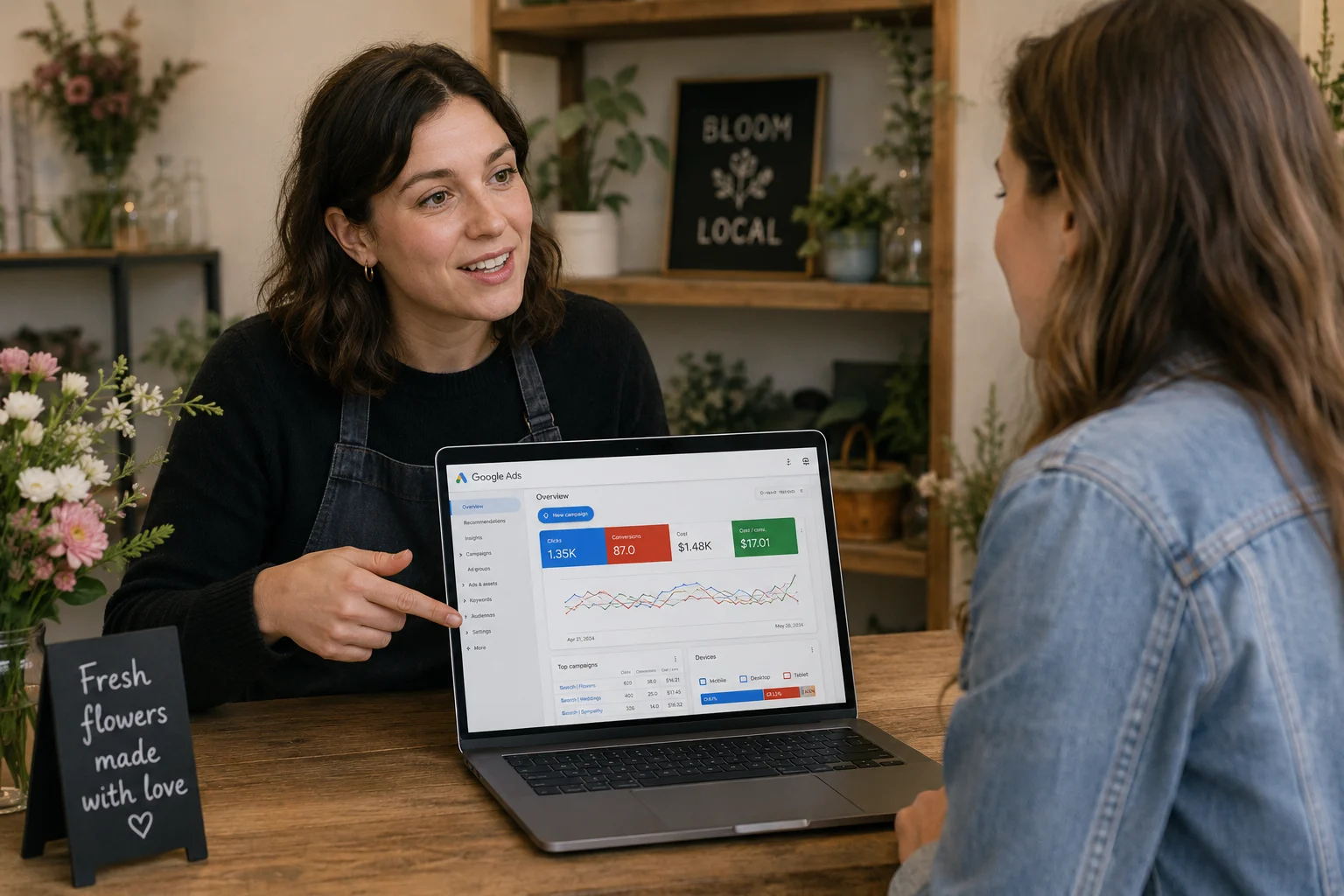
You should always have access to real-time campaign data. If an agency insists on sending static PDF reports instead of granting dashboard access, they may be hiding poor performance. A trustworthy partner will set up dashboards in Google Ads, Meta Ads Manager, or a third-party tool where you can monitor spend and results.
🚩 Long-Term Lock-In Contracts
Contracts that lock you in for 12–24 months without performance review windows are dangerous. PPC is dynamic, and campaigns should be evaluated quarterly. A good agency will offer flexible terms with clear exit clauses if KPIs are not met.
Bottom line: If you hear guarantees, secrecy, or restrictions, walk away. The right agency builds trust through transparency, not gimmicks.
The Crucial Question Checklist
To truly vet a PPC agency, you need to ask technical, specific questions. Here are 10 essential ones, along with what a qualified answer should sound like versus a generic sales response.
1. Who owns the ad account?
- Qualified answer: “You will own the Google Ads account. We’ll request manager access so you retain full control.”
- Generic response: “We manage everything in our proprietary account.”
2. How do you structure campaigns?
- Qualified answer: “We use a mix of search, display, and remarketing campaigns, segmented by product/service categories.”
- Generic response: “We’ll set up campaigns to get you clicks.”
3. What’s your approach to keyword research?
- Qualified answer: “We use tools like SEMrush and Google Keyword Planner, focusing on intent-driven keywords and negative keyword lists.”
- Generic response: “We’ll target the best keywords.”
4. How do you optimize bids?
- Qualified answer: “We leverage automated bidding strategies like Target CPA and ROAS, adjusting based on performance data.”
- Generic response: “We’ll make sure your bids are competitive.”
5. How do you measure success?
- Qualified answer: “We track conversions, cost per acquisition, and lifetime value. Success is tied to ROI, not just clicks.”
- Generic response: “We’ll get you more traffic.”
6. What reporting tools do you use?
- Qualified answer: “We provide access to live dashboards in Google Data Studio or similar platforms.”
- Generic response: “We’ll send monthly reports.”
7. How do you handle remarketing?
- Qualified answer: “We set up pixel tracking to retarget visitors with tailored ads across Google Display and Meta.”
- Generic response: “We’ll remind people about your business.”
8. What’s your testing methodology?
- Qualified answer: “We run A/B tests on ad copy, landing pages, and audience segments, iterating based on statistical significance.”
- Generic response: “We’ll test what works.”
9. How do you integrate PPC with other channels?
- Qualified answer: “We align PPC with SEO, email, and social campaigns to create a unified funnel.”
- Generic response: “We focus only on ads.”
10. What’s your experience with SMB budgets?
- Qualified answer: “We’ve managed accounts with budgets ranging from $2,000–$20,000 monthly, optimizing for efficiency.”
- Generic response: “We can work with any budget.” Tip: Listen carefully. A qualified PPC specialist provides detailed, technical answers. A generic salesperson relies on vague promises.
Data Ownership, Contracts, and Transparency
One of the most overlooked aspects of hiring a PPC agency is data ownership. As the SMB owner, you must always retain control of:
- Google/Meta ad accounts
- Pixel data (used for remarketing and tracking conversions)
- Historical performance history If the agency hosts campaigns in their proprietary accounts, you risk losing all data if you part ways. This means starting from scratch, with no historical benchmarks to guide future campaigns. That’s a costly mistake.
Legal and Operational Risks
Legal: Without ownership rights, you may face disputes over access.
Operational: Losing pixel data means remarketing audiences vanish overnight.
Financial: Historical performance data is critical for optimizing bids and budgets. Transparency should extend to contracts as well. Look for agreements that specify:
Clear KPIs and review periods
Exit clauses without penalties
Explicit mention of account ownership rights Remember: your ad account is an asset. Protect it like you would your customer list.
Partner Structures: Freelancer vs. Niche Agency vs. Generalist Firm
Choosing between a freelancer, a niche agency, or a generalist firm depends on your business size and goals.
Here’s a breakdown:
Freelancer vs agency for Google Ads: If your budget is under $1,000/month, a freelancer may suffice. For larger budgets or complex funnels, a niche agency provides the depth and resources you’ll need.
Conclusion
Hiring a PPC agency doesn’t have to feel like a gamble. By spotting red flags, asking the right technical questions, and insisting on data ownership, you can secure a partner who drives measurable growth. Whether you choose a freelancer, niche agency, or generalist firm, alignment matters more than promises.
To make this process easier, create a vetting scorecard. List the questions, note the answers, and score agencies based on transparency, expertise, and fit. This structured approach ensures you’re not swayed by charisma alone but guided by facts.
Final thought: Choosing a PPC agency is less about finding the flashiest pitch and more about securing a partner who respects your business, your data, and your goals.